Lomit Patel on the B2B sale you're losing before the meeting starts
The Chief Growth and Marketing Officer at TYB on why the buyer journey now happens upstream of every sales call, and what vendors should do about it.
Disclaimer: The opinions represented here are those of the individual and do not necessarily represent those of their current or former employer.
B2B has always been a relationship business. What is new is that the relationship work used to happen on the sales call, and now it happens before any call exists. By the time a senior buyer agrees to talk, they have vetted you through three or four research layers, formed a working opinion, and built a battle card. The meeting is a validation exercise. If you only show up for the meeting, you have lost most of the leverage you needed to win.
We spoke with Lomit Patel, Chief Growth and Marketing Officer at TYB, about this shift. Lomit is one of the most connected operators in modern growth, and one of the few B2B leaders who has been on both sides of the table. His framework for how he actually buys is a clear map of what every B2B vendor should be optimizing around.
Watch the full interview below, or read on for a selection of key takeaways.
Key Takeaways
- Treat the demo as a validation exercise, not a discovery call. Buyers arrive with a hypothesis built from research they did days or weeks before.
- Audit your LinkedIn credibility before you outbound. Real employees, real page history, real recent posting. The same message lands or dies based on who's sending it.
- Show up in LLMs, and shape how you show up. Not appearing in ChatGPT, Claude, Perplexity, and Gemini is scarier than appearing imperfectly.
- Lead with the practitioner's voice, not the case study. Branded case studies read like paid ads. Interviews with the people who did the work read like proof.
- Train sellers to listen, restate, and validate. "Tell me more" is the magic phrase. The product comes second.
For more on how earned trust shapes modern GTM, see our Trust Gap research.
The B2B sale is decided before the demo
Lomit sees 10 to 30 inbound messages a day across email and LinkedIn. Most go unread. The ones that earn a reply share one trait: by the time the message lands, the sender is already a name he recognizes. They showed up in his research before they showed up in his inbox. That research is the sale.
"Going into these meetings, we now have access to really have done a lot more deeper research into knowing who they are and forming opinions. And it's really a matter of them either validating or not validating what our point of view is on them. The point of view going in is less about we trust this, but how can we get them to answer these questions to inform us that they're worth trusting."
The sequence has inverted. The demo is now the place where the buyer attempts to disprove their working hypothesis. Build trust upstream, in the assets, profiles, and voices the buyer encounters during their research. Junior team members run first-round demos with battle cards already drafted. By the time a decision-maker is in the room, the answer is mostly already there.
LinkedIn is the credibility filter
The first place Lomit goes when an unfamiliar vendor surfaces is LinkedIn. He is looking for three things: a real person behind the outreach, a credible company page, and signs that the company has been around long enough to build trust.
"Seven out of 10 times a person doesn't even exist. That's strike one. And then I look at the company. If you've created a LinkedIn page and you've got one employee or whatever, for the most part, that's strike two. The other thing I look at is how long has that page even been around? If it hasn't been around that long, that's another strike."
There is no clever fix. The work is to invest in the boring infrastructure of credibility well before any buyer comes looking. That means a populated employee roster, executives with active and substantive profiles, a company page with real posting history, and visible investor and partner relationships. A buyer who can verify you in 30 seconds keeps you in the pipeline. A buyer who cannot quietly drops you.
LLMs are the new SEO, so audit how you show up
The pre-meeting research now routinely passes through ChatGPT, Claude, Perplexity, and Gemini. The buyer asks the LLMs for a synthesis: positioning, strengths, weaknesses, who you really sell to, pricing, what users actually say on Reddit. Lomit goes further. He runs the four LLMs in parallel and feeds each one's response back to the others to debate. The disagreements surface the weak claims.
"The first question I ask myself is, how consistently is that showing up across the four major LLMs? And then I get them to debate each other. If you and I are looking and debating a problem, we're going to come up with a better solution than me trying to do it myself."
For vendors, this means two jobs. First, get into the LLM index by being mentioned across the substrate the models scrape: founder posts, employee posts, customer interviews, third-party podcasts, partner content. Second, audit what shows up. Disgruntled ex-employees and unhappy customers shape the narrative whether you engage or not. The scariest LLM result is no result. The second scariest is a result you have never read.
Practitioner stories outperform case studies
The Splendid Trust Gap research found that 84 percent of B2B buyers are more likely to consider a vendor who interviewed them directly. Lomit's experience as a creator validates the finding from the inside. When he posts traditional case studies, engagement is muted. When he interviews the practitioner who did the actual work on the customer side, and tells the story in their voice, the post performs.
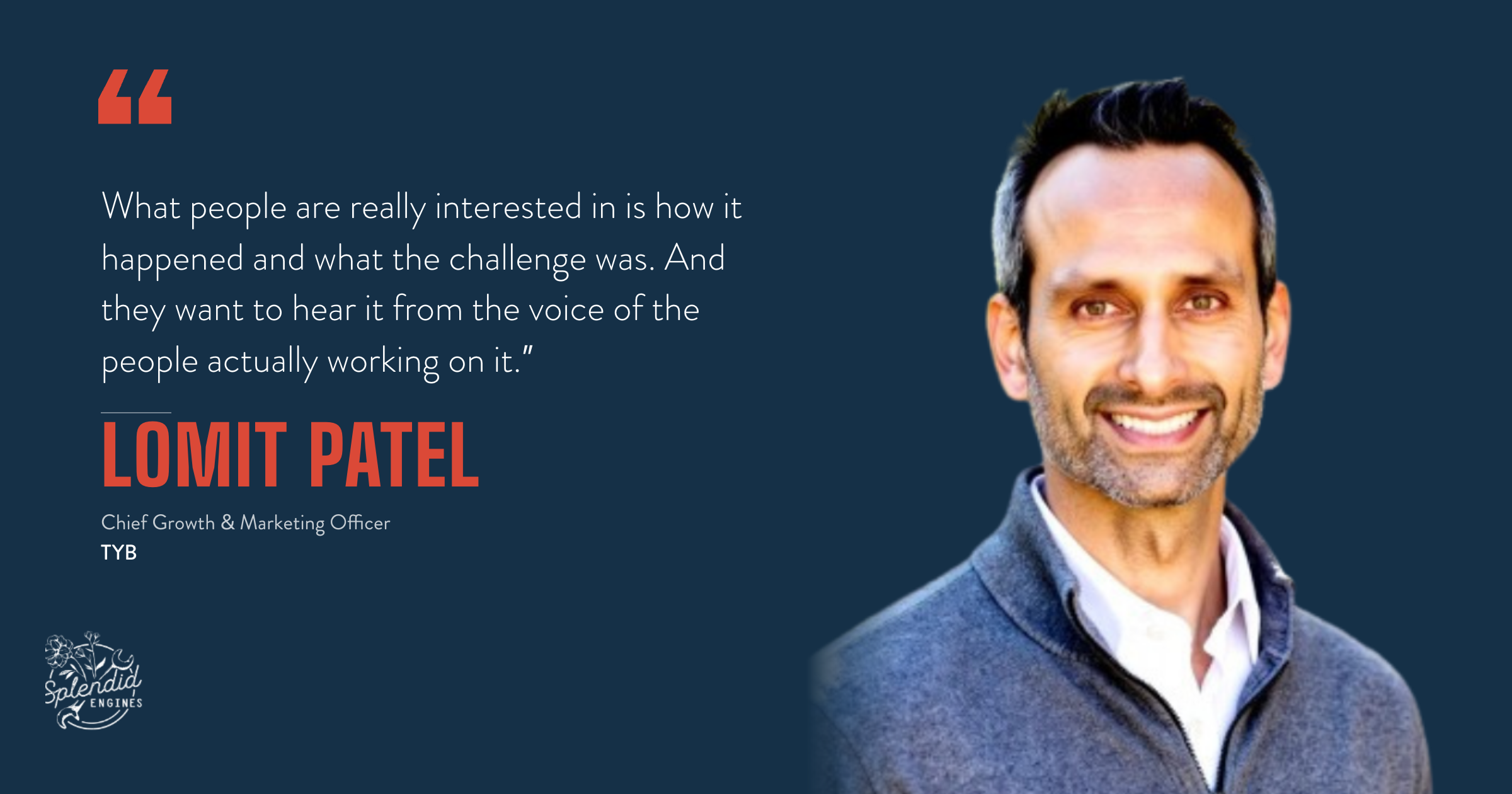
"What people are really interested in is how did it happen and what was the challenge. But not from our voice, from the voice of the people that were actually working on it. Taking it from the narrative of the practitioner of who actually was involved in making that happen does really well."
The mechanic is straightforward. Practitioner stories are credible by default because the named operator is on the hook for what they said. The brand benefits without controlling the narrative. The featured employees of the customer engage with the post, which signals quality to the LinkedIn algorithm, which extends reach. The customer relationship deepens because the work made them look good. When you make somebody else look good, it reflects back on you.
The starting line has changed
The thread connecting all of this is older than any of the tooling. Active listening. Restating the buyer's actual problem. Asking follow-up questions that show curiosity. The B2B sale is still a conversation about whether you understand what the buyer is actually trying to solve. What has changed is where that conversation now starts. It starts in the buyer's research, days or weeks before the calendar invite. The vendors winning right now show up in that research with substance, credibility, and a track record of letting their customers do the talking.
Lomit Patel leads growth and marketing at TYB, and writes regularly about modern go-to-market at lomitpatel.com.
Talk to us.
Building the relationship engine for your business? We'd love to hear what you're working on.
Book a call