Why Your Best Content Should Reach The Fewest People
Most B2B companies chase mass appeal content. The data says that's the wrong call.
Every B2B marketing team has the same dream. They want to publish the report that gets picked up by major publications, cited across the industry, and downloaded tens of thousands of times. They want to be the next State of the Industry: the sweeping, authoritative study that everyone in the market has seen.
It's a seductive goal. And it leads most B2B companies down the wrong path.
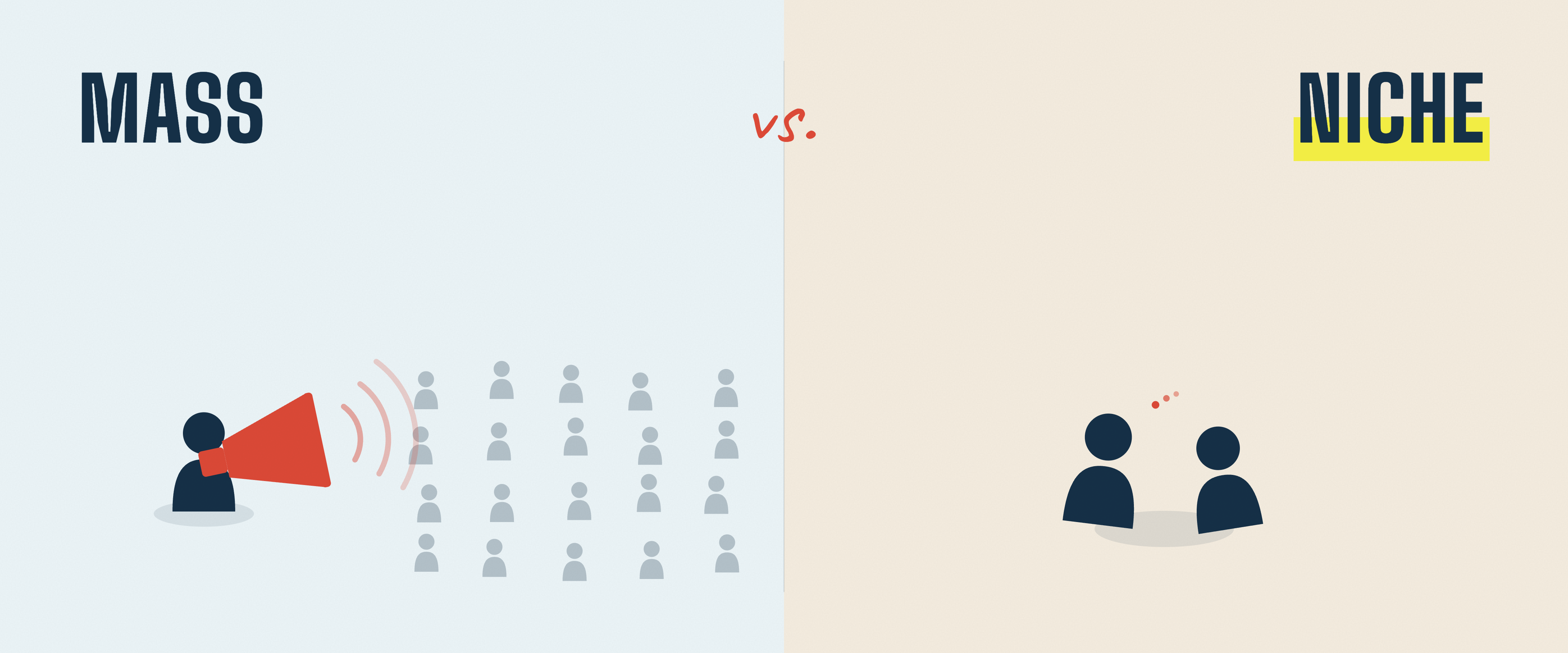
There is a spectrum to B2B content strategy. At one end is mass appeal content: broad, high-visibility material designed to capture general market attention. Think "State of [Industry]" reports, annual trend roundups, and macro-level data studies. At the other end is niche appeal content: highly focused material built for a specific audience, tackling category-specific dynamics, buyer challenges, and vertical behaviors.
Both serve real purposes. But they don't produce the same results. For most B2B companies, choosing the wrong one is an expensive mistake.
That gap matters more than most marketers realize. Splendid Engines surveyed 400 senior B2B buyers on what actually moves them from aware to considering a vendor. The number one driver: feeling understood. Not price. Not brand recognition. Not reach. Understanding.
The Appeal of Going Big
Mass appeal content has obvious advantages. It can generate significant media coverage, drive large volumes of traffic, and build brand recognition at scale. If your goal is to establish a credible voice across an entire market, broad content can accelerate that.
But here is the problem: the mass appeal lane is already full.
The companies dominating generalist B2B content are typically large organizations with dedicated research teams, proprietary datasets at scale, and pre-existing editorial relationships with top-tier media. Think the State of Industry reports, the Global Marketing Benchmark studies, the Annual Industry Indexes. When a growth-stage company tries to compete in that space, they enter a race with a structural disadvantage.
The content might be good. The reach still belongs to incumbents.
What Niche Content Actually Does
Niche content trades volume for precision. Instead of trying to reach everyone in a market, it targets the specific people who matter to your pipeline and gives them something genuinely useful for their specific situation.
Take mobile advertising as an example. A report on broad trends across the entire mobile app ecosystem has wide appeal. A report on user retention patterns in real money gaming apps has a narrow audience, but very high relevance to that audience. One gets attention. The other gets meetings.
This distinction matters in practice. According to 6sense's 2025 Buyer Experience Report, 94% of buying groups had already ranked their preferred vendor before speaking with sales. The vendor they preferred went on to win 77% of those deals. Buyers are forming opinions in the content phase, long before a salesperson enters the picture.
The reason is straightforward: relevance creates trust, and trust closes deals. We saw this play out in the B2B Trust Gap report, where 86% of B2B buyers are more likely to consume content that features people like them. Broad content can't create that signal. Niche content, built around the specific people you're trying to reach, can.
The Sales Enablement Advantage
Here is an angle that rarely gets discussed: niche content is a sales tool.
When your team reaches out to a VP at a company in a specific vertical, a well-timed report on trends in their exact category is not just content. It is a reason to respond. It signals that your company understands their world. It gives the prospect something useful before they ever talk to a salesperson. And it gives your sales team a relevant, non-pushy reason to follow up.
Mass appeal content cannot do that. You cannot send a prospective client a "State of the Digital Economy 2025" report and expect them to feel seen. The more general the content, the weaker the signal: "We thought of you when we wrote this" only lands when it's actually true.
Forrester research found that 92% of B2B buyers start their evaluation with at least one vendor already in mind. By the time they make contact, 41% have already selected a single preferred vendor. Your content either shaped that preference, or someone else's did.
The Trade Press Effect
There is a second benefit to niche content that compounds over time: specialist media coverage.
Mass appeal content competes for generalist publications: the trade newsletters everyone subscribes to, the marketing blogs with broad audiences. Getting coverage there is valuable, but it means competing with every well-resourced marketing team in your category.
Niche content targets specialist trade press. If you publish a focused study on purchase behavior in a specific app category, the publications that cover that specific market will pay attention. Almost no one else is writing about it at that depth.
That coverage lands differently. It reaches your actual buyers. It positions your company as a credible authority within a specific domain rather than a general industry voice. And it builds relationships with journalists and editors who cover the exact beats your prospects read.
The "Start Niche" Rule
Young companies should start niche. Not because of resource constraints (though those are real) but because of return.
When a company is building its reputation, every piece of content doubles as relationship capital. A niche report gives you something specific to share with specific people. It opens doors with trade press that cover your target market. It gives your sales team a concrete reason to reach out to exactly the right accounts at exactly the right moment.
Mass appeal content distributes your attention across everyone. For a company still building its core customer base, that diffusion is expensive.
The time for mass appeal content comes later, once you have the brand equity, the data, and the media relationships to compete in that space. Start narrow. Build outward.
Both Can Coexist, But One Comes First
None of this means mass appeal content has no role. It does. Once a company has established itself within specific niches, broad content can reinforce name recognition and attract inbound at scale. The two strategies are not mutually exclusive.
But they are not equal.
Mass appeal content builds recognition. Niche content builds relationships. Recognition is nice. Relationships drive revenue.
For most B2B companies, especially those with defined target verticals and sales teams that need real reasons to reach out, the math points clearly toward niche. Not because broad content fails, but because targeted content works better.
Begin with the end in mind. The end is pipeline. And pipeline comes from content that speaks directly to the people you're trying to close.
Talk to us.
We build targeted content programs that drive pipeline for companies with specific audiences and defined verticals.
Book a call